Memory-Driven CRM: Systems That ‘Remember’ Every Interaction Contextually
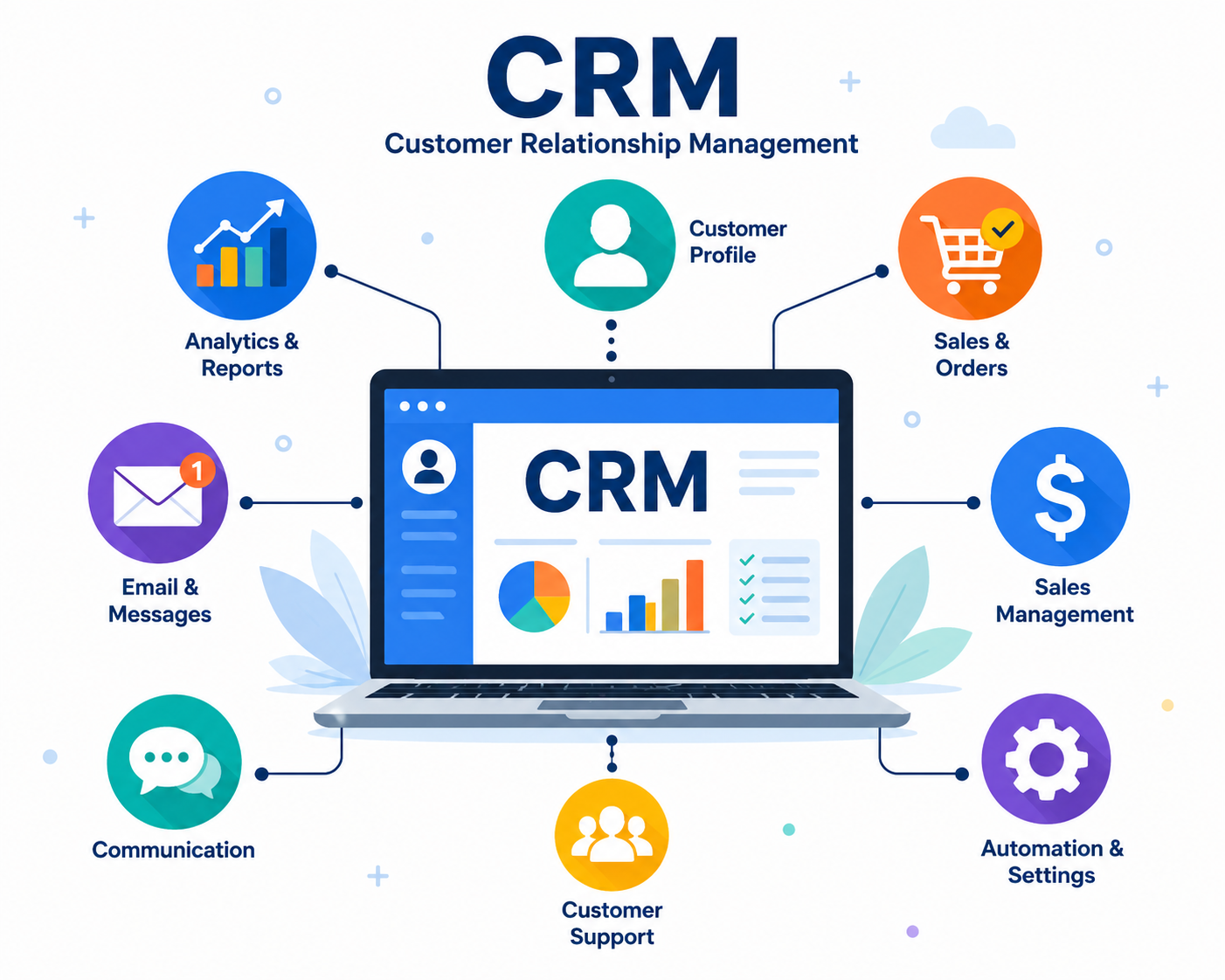
Customer relationship management has always been about memory. At its simplest, a CRM system is a repository of interactions—calls logged, emails stored, deals tracked, tickets resolved. But despite decades of innovation, most CRM platforms still struggle with a fundamental limitation: they record information without truly understanding it. They store data, yet fail to remember in a way that feels intelligent, contextual, and human.
This gap is now giving rise to a new paradigm—memory-driven CRM. Unlike traditional systems that rely on static records and manual inputs, memory-driven CRM systems are designed to continuously absorb, interpret, and recall interactions with full context. They don’t just log that a conversation happened; they understand what was said, why it mattered, and how it should influence future interactions. In doing so, they transform CRM from a passive database into an active, thinking layer within the customer experience.
The idea of “memory” in this context goes far beyond simple data retention. Human memory is associative, contextual, and adaptive. When we recall a past interaction, we don’t just retrieve isolated facts; we remember tone, intent, outcomes, and relationships between events. Memory-driven CRM aims to replicate this capability at scale. It builds a continuously evolving narrative of each customer, where every interaction contributes to a richer, more nuanced understanding.
At the core of this shift is the integration of advanced artificial intelligence, particularly systems capable of processing natural language and unstructured data. Conversations across email, chat, voice, and social channels are no longer treated as disconnected artifacts. Instead, they are analyzed in real time to extract meaning, sentiment, intent, and key entities. This information is then woven into a unified memory model that evolves with every interaction.
What makes this approach powerful is its ability to maintain context across time and channels. A customer who reaches out today is not treated as a blank slate. The system remembers previous conversations, preferences, issues, and outcomes, and uses that memory to inform the present interaction. This continuity creates a more seamless and personalized experience, reducing friction and eliminating the need for customers to repeat themselves.
In practical terms, memory-driven CRM enables a level of responsiveness that traditional systems cannot match. When a sales representative engages with a prospect, the system can surface relevant insights drawn from past interactions—what objections were raised, what content resonated, what stage the customer is in, and what actions are most likely to move the relationship forward. Similarly, in customer support, agents can instantly understand the history and context behind a request, allowing them to resolve issues more efficiently and empathetically.
The impact on customer experience is profound. Interactions begin to feel less transactional and more relational. Instead of treating each touchpoint as an isolated event, brands can engage in an ongoing dialogue that evolves over time. This continuity fosters trust, as customers feel recognized and understood rather than processed through a system.
Memory-driven CRM also changes how organizations think about data. In traditional models, data is often fragmented across multiple systems, requiring manual effort to piece together a complete picture of the customer. In a memory-driven approach, data is not just unified but contextualized. Relationships between events are captured, patterns are identified, and insights are generated automatically. This reduces the burden on teams while increasing the value of the data itself.
Another key advantage lies in predictive capability. Because memory-driven systems continuously learn from past interactions, they can anticipate future needs and behaviors. They can identify when a customer is at risk of churn, when they are likely to make a purchase, or when they may need support. This allows organizations to move from reactive engagement to proactive intervention, addressing issues before they escalate and opportunities before they are missed.
However, building a memory-driven CRM is not without its challenges. One of the most significant is data quality. For a system to “remember” effectively, it must have access to accurate, comprehensive, and well-structured data. In many organizations, data remains siloed, inconsistent, or incomplete, limiting the system’s ability to generate meaningful insights. Overcoming this requires not only technological investment but also a cultural shift toward better data governance and integration.
Privacy and trust are equally critical considerations. A system that remembers everything about a customer must do so responsibly. Transparency in how data is collected, stored, and used is essential, as is giving customers control over their information. Without trust, even the most advanced CRM system will fail to deliver its full potential.
There is also the question of interpretability. As systems become more complex and autonomous, it becomes increasingly important to understand how decisions are made. Organizations must ensure that the insights generated by memory-driven CRM are not only accurate but also explainable, allowing teams to act with confidence and accountability.
Despite these challenges, the trajectory is clear. As customer expectations continue to rise, the demand for more intelligent and context-aware systems will only grow. Memory-driven CRM represents a natural evolution, aligning technology more closely with the way humans think, remember, and interact.
Looking ahead, the capabilities of these systems will continue to expand. Advances in multimodal AI will allow CRM platforms to integrate not just text and voice, but also visual and behavioral signals. Real-time processing will enable instant adaptation to changing contexts, while deeper integration with other enterprise systems will create a more holistic view of the customer. The result will be a CRM ecosystem that is not only aware of the past but actively shaping the future of each relationship.
In this emerging landscape, the role of CRM is no longer confined to managing contacts and tracking deals. It becomes a central intelligence layer that connects every part of the organization around a shared understanding of the customer. This shift has the potential to redefine how businesses operate, breaking down silos and enabling more coordinated, customer-centric strategies.
Memory-driven CRM is ultimately about moving from information to understanding. It is about creating systems that don’t just store interactions, but learn from them, connect them, and use them to deliver better outcomes. In doing so, it brings us closer to a vision of customer engagement that is continuous, contextual, and deeply human—where every interaction builds on the last, and every customer feels truly remembered.