Top Marketing Automation Tools in 2026
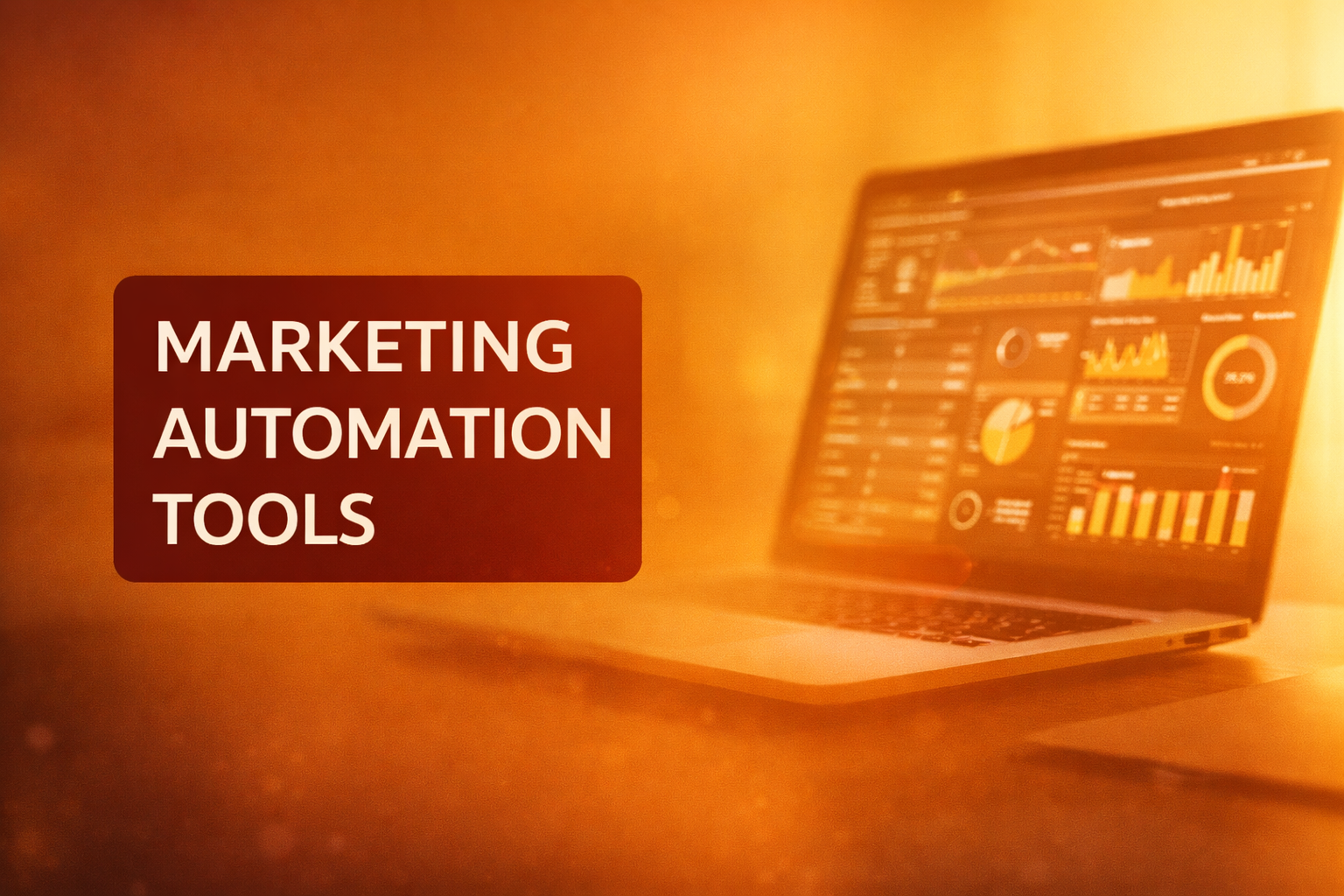
Marketing automation in 2026 looks very different from what it did even a few years ago. What was once a system for scheduling emails and managing simple workflows has evolved into a sophisticated, AI-powered ecosystem that can orchestrate entire customer journeys in real time. Today’s leading platforms are no longer just tools—they are intelligent systems that combine data, automation, and decision-making to drive growth.
At the center of this transformation is the convergence of artificial intelligence and automation. Modern platforms are not just executing campaigns; they are learning from data, predicting customer behavior, and optimizing interactions continuously. This shift has elevated expectations across the industry. Businesses are no longer looking for tools that simply save time—they are looking for platforms that can improve outcomes.
Among the most prominent players in this space, HubSpot continues to stand out as one of the most widely adopted platforms. Its strength lies in its ability to bring multiple functions together into a single ecosystem. By combining CRM, marketing automation, sales tools, and customer service capabilities, it provides a unified view of the customer journey. In 2026, its deep integration of AI has made it even more powerful, enabling predictive lead scoring, automated content suggestions, and highly personalized engagement. For many organizations, particularly in the B2B space, HubSpot represents the benchmark for what an all-in-one platform can achieve.
At the enterprise level, Salesforce Marketing Cloud remains a dominant force. Its capabilities extend far beyond traditional marketing automation, offering advanced customer data management, omnichannel orchestration, and sophisticated analytics. What differentiates Salesforce is its scale and depth. It is designed for organizations that operate across multiple markets and channels, where complexity is the norm. With its Einstein AI layer, the platform is increasingly focused on predictive insights and real-time personalization, helping large enterprises make sense of vast amounts of data and act on it effectively.
Adobe Marketo Engage continues to play a critical role, particularly in B2B marketing environments. Known for its strength in lead management and account-based marketing, Marketo has built a reputation for handling complex customer journeys. In 2026, its integration within the broader Adobe ecosystem has enhanced its ability to deliver personalized experiences across channels. It remains a preferred choice for organizations that require deep customization and control over their marketing processes.
While these platforms dominate at the higher end of the market, tools like ActiveCampaign have carved out a strong position by focusing on flexibility and depth of automation. ActiveCampaign is particularly valued for its ability to create highly customized workflows, allowing businesses to tailor interactions based on detailed behavioral triggers. It offers a level of control that appeals to teams looking to go beyond basic automation without the complexity of enterprise systems.
In the e-commerce space, platforms such as Omnisend have gained significant traction by focusing on the specific needs of online retailers. E-commerce marketing requires a different approach—one that emphasizes conversion, retention, and lifecycle engagement. Omnisend addresses this by integrating email, SMS, and automation into a single system designed to drive sales. Its strength lies in its ability to connect customer behavior directly to revenue outcomes, making it particularly effective for brands operating in competitive online markets.
At the same time, newer platforms like Ortto are redefining how marketing automation is approached. Rather than focusing solely on execution, Ortto emphasizes customer journey orchestration, combining data, messaging, and analytics into a unified experience. Its visual approach to journey building reflects a broader trend in marketing technology—making complex systems more intuitive and accessible.
Another important development in 2026 is the growing role of integration platforms like Zapier. While not a marketing automation tool in the traditional sense, Zapier has become an essential part of many marketing stacks. It connects different systems, enabling workflows that span multiple tools without requiring custom development. As marketing ecosystems become more complex, this ability to integrate and automate across platforms is increasingly valuable.
Perhaps the most significant shift, however, is the rise of AI-native platforms such as Jasper. Originally focused on content generation, these tools are expanding into broader marketing workflows, enabling teams to create, test, and optimize campaigns at scale. This reflects a larger trend: marketing automation is no longer just about managing processes—it is about generating and refining content dynamically.
What ties all of these tools together is a common direction. Marketing automation is moving toward systems that are more intelligent, more connected, and more adaptive. The distinction between tools is becoming less about individual features and more about how well they integrate data, automation, and AI into a cohesive whole.
Choosing the right platform in this environment is not simply a matter of selecting the most advanced technology. It depends on the specific needs of the business—its size, its complexity, and its goals. A growing company may benefit from the flexibility of a tool like ActiveCampaign, while a global enterprise may require the scale of Salesforce or Adobe. An e-commerce brand may prioritize conversion-focused platforms, while a content-driven organization may lean toward AI-powered tools.
What is clear, however, is that the role of marketing automation is expanding. It is no longer just a support function—it is becoming a central driver of how businesses engage with customers and generate revenue.
As we look ahead, the evolution of these tools will continue to be shaped by advances in AI, data integration, and customer expectations. The platforms that succeed will be those that can not only automate tasks, but also understand context, adapt to change, and deliver meaningful experiences at scale.