Event-Driven Marketing: Triggering Campaigns from Real-World Signals
Marketing has long been structured around calendars. Campaigns are planned weeks in advance, aligned with product launches, seasonal peaks, or quarterly targets. While this approach provides predictability, it often fails to reflect how customers actually behave in the real world—fluidly, unpredictably, and in response to moments that don’t follow a schedule. This disconnect is precisely what event-driven marketing aims to solve.
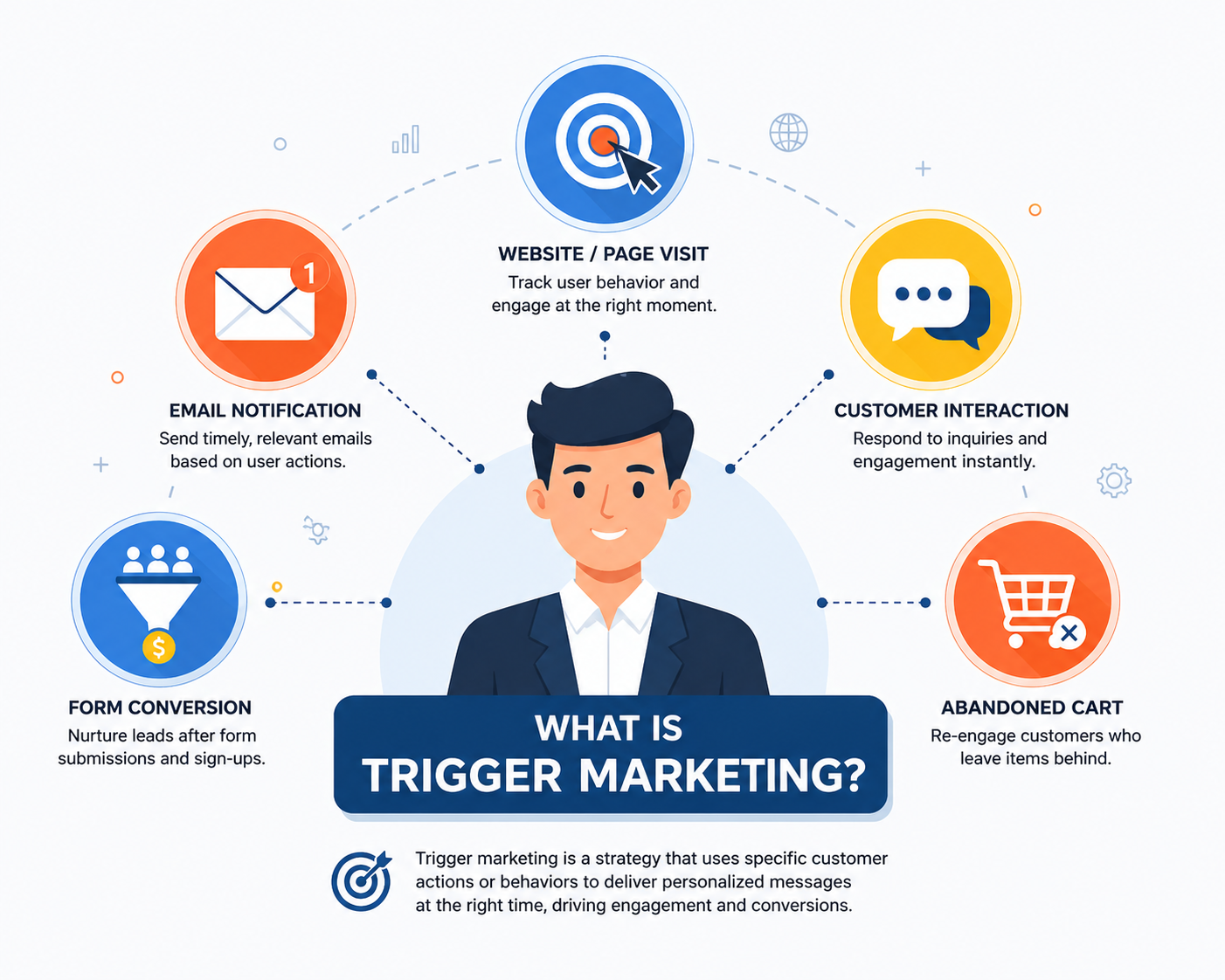
Event-driven marketing shifts the focus from time-based campaigns to signal-based engagement. Instead of asking “What should we send this week?”, it asks “What just happened, and how should we respond?” These “events” can be anything from a customer browsing a product multiple times, to a sudden change in weather, to a real-world milestone like moving to a new city or starting a new job. The defining characteristic is immediacy. When a meaningful signal occurs, the system triggers a relevant response in real time.
At its core, event-driven marketing is about aligning brand communication with the natural rhythm of customer behavior. It recognizes that relevance is not just about who the customer is, but what they are experiencing at a given moment. A well-timed message, delivered in response to a real-world signal, can feel intuitive and helpful rather than intrusive. It transforms marketing from interruption into assistance.
The rise of this approach is closely tied to advances in data collection and processing. Today’s digital ecosystem generates an enormous volume of signals across devices, platforms, and environments. From website interactions and mobile app usage to location data and IoT devices, the potential sources of events are vast. What has changed is the ability to process these signals in real time and act on them instantly. Cloud infrastructure, streaming data pipelines, and machine learning models make it possible to detect patterns and trigger actions within milliseconds.
This capability enables a fundamentally different kind of customer engagement. Consider a scenario in which a user repeatedly searches for flights to a particular destination. In a traditional campaign model, that behavior might be captured in a weekly report and used to inform future targeting. In an event-driven model, the system recognizes the intent immediately and triggers a personalized offer, content recommendation, or reminder while the interest is still active. The difference is not just speed—it is contextual relevance at the moment of decision.
Real-world signals extend beyond digital behavior into physical and environmental contexts. Weather is a classic example. A sudden drop in temperature can trigger campaigns for winter apparel, while an unexpected heatwave can drive promotions for cooling products. Location-based signals can indicate when a customer is near a store, enabling timely offers or reminders. Even broader events, such as cultural moments, economic shifts, or public announcements, can serve as triggers when interpreted correctly.
What makes event-driven marketing powerful is its ability to connect these signals into meaningful narratives. A single event may not be significant on its own, but when combined with historical data and predictive models, it can reveal deeper intent. For instance, a customer browsing home decor items, searching for moving services, and updating their address could indicate a relocation. Recognizing this pattern allows brands to respond with highly relevant content, from furniture recommendations to local service providers.
This approach also redefines the customer journey. Instead of linear funnels with predefined stages, journeys become dynamic and responsive. Each interaction influences the next, creating a feedback loop where the system continuously learns and adapts. The result is a more fluid experience that evolves with the customer, rather than trying to guide them along a fixed path.
From an operational perspective, implementing event-driven marketing requires a shift in both technology and mindset. Traditional marketing stacks are often built around batch processing and scheduled workflows. Event-driven systems, by contrast, rely on real-time data streams, event brokers, and trigger-based automation. This architecture allows for immediate detection and response, but it also introduces complexity. Ensuring that data flows seamlessly across systems and that triggers are accurately defined is critical to success.
Equally important is the design of the responses themselves. Not every event should trigger an action, and not every action should be immediate. Over-triggering can lead to message fatigue and diminish the effectiveness of the approach. The key lies in prioritization and orchestration—understanding which signals matter most and how they should be sequenced to create a coherent experience. This requires a balance between automation and strategic oversight.
Privacy and trust are central considerations in this model. Event-driven marketing relies on timely and often sensitive data, making it essential to handle information responsibly. Customers must feel that their data is being used to enhance their experience, not to exploit it. Transparency, consent, and clear value exchange are crucial in maintaining this trust. Without it, even the most sophisticated system can backfire.
The benefits, when executed well, are significant. Event-driven marketing can dramatically improve engagement rates, as messages are delivered when they are most relevant. It can increase conversion rates by aligning offers with intent, and it can enhance customer satisfaction by reducing friction and anticipating needs. Perhaps most importantly, it enables brands to operate with a level of agility that is increasingly necessary in a fast-changing environment.
Looking ahead, the scope of event-driven marketing is likely to expand further as new sources of real-world signals emerge. The proliferation of connected devices, advancements in sensor technology, and the integration of AI into everyday environments will create even richer streams of data. This will enable more precise and nuanced triggers, as well as more sophisticated responses.
At the same time, the challenge will be to maintain a human-centered approach. As systems become more capable of reacting to events, the risk is that interactions become overly mechanistic or intrusive. The goal should not be to respond to every signal, but to respond in ways that are meaningful, respectful, and aligned with the customer’s needs.
Event-driven marketing represents a shift from planning to responsiveness, from schedules to signals, and from broad messaging to contextual engagement. It reflects a deeper understanding of how people make decisions—shaped by moments, influenced by context, and driven by immediate needs. In embracing this approach, brands move closer to delivering experiences that feel less like marketing and more like timely, relevant assistance.