DMWF Spotlight: As AI Adoption Hits 88%, Storytelling Reclaims Its Place in Modern Marketing
Artificial intelligence is now firmly embedded in the daily workflows of marketers, with 88% reportedly using AI tools in their roles. From platforms like entity[“software”,”ChatGPT”,”AI chatbot”] to entity[“software”,”Claude”,”AI assistant”], AI has rapidly transitioned from experimentation to everyday utility—reshaping how content is created, campaigns are executed, and decisions are made.
But as AI adoption accelerates, a more unexpected shift is emerging. The conversation is no longer just about speed, scale, or efficiency. It is increasingly about meaning.
From Content Volume to Content Value
Over the past few years, AI has enabled marketers to produce content at unprecedented scale. The initial promise was clear: faster production, higher output, and the ability to do significantly more with fewer resources.
At the same time, concerns followed closely behind—ranging from job displacement to the diminishing value of content in an environment where volume is no longer a differentiator.
Now, the industry is beginning to recalibrate. As content becomes effectively infinite, the competitive advantage is shifting away from quantity and toward quality and perspective.
What stands out in 2026 is not how much content a brand produces, but how meaningful that content is.
The Return of Storytelling
In this new landscape, storytelling has re-emerged as a critical capability.
While AI can generate text, visuals, and campaigns at scale, it cannot define what is worth saying. That responsibility remains firmly with human marketers. The ability to craft a compelling narrative, connect with an audience emotionally, and communicate a clear point of view has become more valuable—not less.
Key differentiators now include:
- A distinct and authentic voice
- Relevance to specific audiences
- Emotional intelligence in messaging
- Strategic restraint—knowing when not to communicate
As automation handles production, storytelling becomes the layer that gives content its impact.
AI as an Enabler, Not a Replacement
Platforms like entity[“software”,”Optimizely One”,”digital experience platform”] reflect this evolving approach. Their embedded AI solution, entity[“software”,”Optimizely Opal”,”AI agent orchestration platform”], is designed to automate tasks such as campaign planning, content drafting, and optimization.
The goal is not to replace marketers, but to reallocate their time and focus.
By taking over repetitive and operational tasks, AI allows teams to concentrate on higher-value work—strategy, creativity, and storytelling. In doing so, it restores something often lost in high-volume marketing environments: the space to think.
A New Definition of Marketing Success
The brands leading in 2026 are not those producing the most content. Instead, they are those that combine AI-driven efficiency with human-led creativity.
Success is increasingly defined by:
- Content that resonates, not just reaches
- Personalization that feels relevant, not automated
- Experimentation informed by data, not guesswork
AI plays a critical role in enabling these outcomes, but it is the human layer—insight, narrative, and intent—that ultimately determines effectiveness.
The Balance Between Technology and Creativity
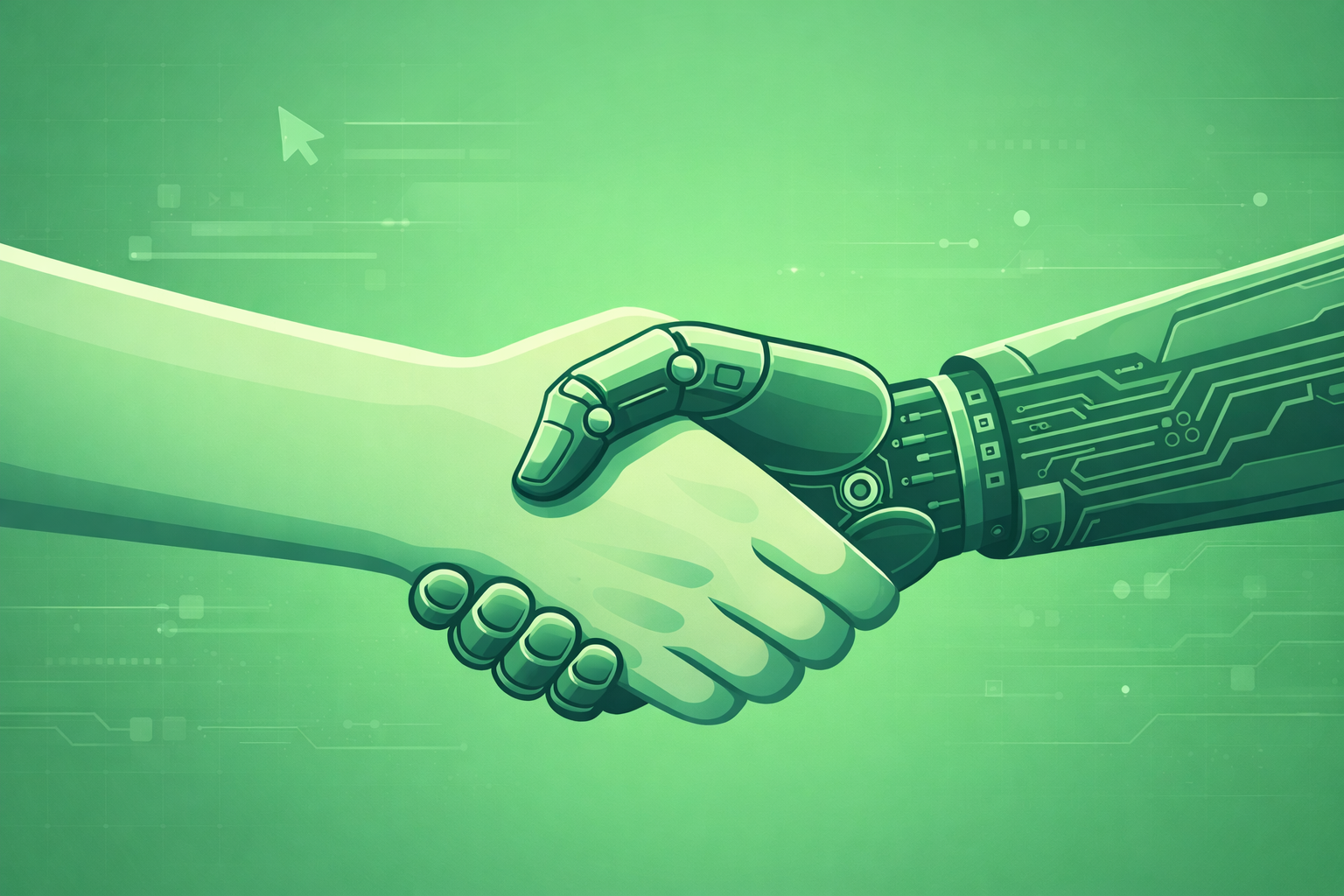
As marketing continues to evolve, the relationship between AI and human creativity is becoming clearer. AI excels at execution, scale, and optimization. Humans excel at meaning, context, and storytelling.
The future of marketing lies in combining these strengths.
For many marketers, this represents a return to the core of why they entered the field in the first place. With AI handling the operational load, there is renewed opportunity to focus on creative thinking and strategic storytelling.
In that sense, the rise of AI is not diminishing the role of marketers—it is redefining it.
And in 2026, it is clear that while AI may power the engine of modern marketing, storytelling remains the force that drives it forward.