AI vs AI Ads: When Algorithms Compete for Attention

Advertising has always been a battle for attention, but the nature of that battle is undergoing a profound transformation. For decades, brands competed with creativity, media budgets, and strategic placement to win over human audiences. Today, a new dynamic is emerging—one where artificial intelligence is not just optimizing campaigns behind the scenes, but actively competing against other AI systems in real time. The result is a rapidly evolving ecosystem where algorithms are both the architects and the adversaries of digital advertising.
This shift marks the beginning of what can be described as “AI vs AI advertising,” a landscape in which machine-driven systems are continuously learning, adapting, and competing to capture and hold attention. It is no longer simply a matter of crafting the right message for the right audience. Instead, it is about designing systems that can outthink, outlearn, and outperform other systems operating with the same objective.
At the heart of this transformation is the automation of decision-making. Modern advertising platforms rely heavily on machine learning models to determine everything from audience targeting and bid pricing to creative optimization and delivery timing. These systems process vast amounts of data in milliseconds, identifying patterns and making adjustments that would be impossible for humans to manage at scale. As more advertisers adopt these technologies, the competitive landscape becomes increasingly algorithmic.
What makes AI vs AI advertising particularly fascinating is that the competition is not static. Each system is constantly evolving based on new data and feedback loops. When one advertiser’s algorithm improves its targeting or creative performance, competing algorithms must adapt in response. This creates a continuous cycle of optimization, where gains are temporary and the competitive edge is always shifting. In this environment, success is less about a single breakthrough and more about sustained adaptability.
Creative itself is being redefined in this context. Traditionally, creative development was a human-driven process, guided by intuition, experience, and cultural insight. While these elements remain important, AI is now playing a central role in generating, testing, and refining creative assets. Algorithms can produce multiple variations of an ad, test them across different segments, and quickly identify which versions perform best. This iterative process happens at a speed and scale that fundamentally changes how creative effectiveness is measured and achieved.
However, as algorithms generate and optimize content, they also compete against similarly optimized content from other brands. This leads to a kind of convergence, where many ads begin to look and feel similar because they are all optimized toward the same performance metrics. In such an environment, differentiation becomes more challenging, and the risk of creative homogenization increases. Standing out requires not just better optimization, but a deeper understanding of human emotion and context—areas where purely data-driven approaches may fall short.
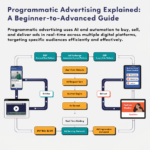
Another critical dimension of AI vs AI advertising is bidding and media buying. Programmatic advertising platforms operate as real-time auctions, where algorithms determine how much to bid for a given impression based on its perceived value. When multiple AI systems are bidding simultaneously, the process becomes a complex interplay of predictive models, each attempting to outmaneuver the others. Small improvements in prediction accuracy can translate into significant competitive advantages, making data quality and model sophistication key differentiators.
This competitive intensity also raises questions about efficiency and diminishing returns. As more advertisers deploy advanced AI systems, the advantage of any single system may decrease. When everyone is using similar tools and strategies, the playing field becomes more level, and the cost of gaining incremental improvements increases. This dynamic can lead to escalating costs, as algorithms bid more aggressively to secure high-value impressions, potentially driving up overall advertising spend.
Beyond the mechanics of competition, AI vs AI advertising has important implications for how attention itself is valued and allocated. Attention is a finite resource, and as algorithms become more effective at capturing it, the competition for that resource becomes more intense. This can result in more intrusive or aggressive advertising strategies, as systems prioritize short-term engagement metrics. Balancing performance with user experience becomes a critical challenge, as overly aggressive tactics can lead to fatigue, distrust, and long-term brand damage.
The role of data in this ecosystem cannot be overstated. High-quality, diverse, and ethically sourced data is the fuel that powers AI systems. The ability to collect, integrate, and analyze data from multiple touchpoints provides a significant advantage in understanding and predicting user behavior. However, increasing concerns around privacy and regulation are reshaping how data can be used. As access to third-party data becomes more restricted, first-party data and contextual signals are becoming more valuable, forcing algorithms to adapt to new constraints.
In this environment, transparency and control become increasingly important. As AI systems take on more decision-making responsibility, marketers must understand how these systems operate and how their decisions align with broader business objectives. Blind reliance on automation can lead to unintended consequences, such as misaligned targeting or inefficient spending. Maintaining a balance between automation and human oversight is essential to ensure that AI-driven strategies remain aligned with brand values and goals.
Looking ahead, the evolution of AI vs AI advertising is likely to accelerate. Advances in generative AI, reinforcement learning, and real-time analytics will further enhance the capabilities of advertising systems. We can expect more sophisticated interactions between algorithms, including the ability to anticipate and counter competitors’ strategies in increasingly complex ways. This could lead to a form of strategic gameplay, where algorithms not only optimize for performance but also adapt based on the behavior of competing systems.
At the same time, the human element will remain crucial. While AI can process data and optimize performance, it lacks the deeper cultural understanding, creativity, and ethical judgment that humans bring to the table. The most successful strategies will be those that combine the strengths of both—leveraging AI for scale and efficiency while relying on human insight for direction and differentiation.
AI vs AI advertising represents a fundamental shift in how attention is contested in the digital age. It transforms advertising from a primarily human-driven endeavor into a complex, dynamic system of competing algorithms. In this new landscape, success depends not just on what you say, but on how intelligently your systems can learn, adapt, and compete. As algorithms continue to evolve, the battle for attention will become increasingly sophisticated, challenging marketers to rethink their approach and embrace a future where machines are both collaborators and competitors.